Portfolio Diversification with Alternative Assets
Fragmenta Books Team · Published on Nov 1, 2026
Portfolio diversification means spreading your money across assets that do not depend on the same things to do well, so that one disappointment cannot decide the whole result. Alternative assets, such as property, loans, royalties or art, can be one way to add that spread, but they bring their own costs, delays and risks, and none of them removes risk altogether.
In short
- Portfolio diversification spreads money across assets that react to different events: interest rates, company profits, rents, book sales.
- Owning several products is not the same as being diversified. Five savings accounts are one kind of asset.
- In 2022 shares and bonds fell together, which shows that even the classic mix can disappoint in a bad year.
- Alternative assets can add a different driver, but they are often harder to sell, harder to value and less regulated.
- A participation in the royalties of books is one possible piece among others, and what it pays depends on how the books actually sell.
What is portfolio diversification?
The UK's Financial Conduct Authority explains diversification as choosing different kinds of investments that do not rely on the same things to do well at any one time, so that you can smooth out the effect of one performing badly while still benefiting when others do well (FCA). The old saying about eggs and baskets says the same thing: if one basket drops, you have not lost everything.
A portfolio is simply the total of what you hold. Portfolio diversification is about what sits inside it. The point is not to own as many things as possible, but to own things that behave differently. When the prices of two assets rise and fall together, holding both gives you almost no protection. Economists call that closeness correlation, and the idea goes back to Harry Markowitz's 1952 paper on portfolio selection. We explain the broader family of options in our guide to alternative investments and compare payment rhythms in passive income investments.
Why more products do not always mean more diversification
Germany's consumer advice centres make a point that is easy to miss: someone who holds only savings certificates, a call-money account and an annuity policy has not spread the risk, because what counts is the asset class each product represents (Verbraucherzentrale). France's AMF puts it the same way: to reduce risk, combine investments that do not behave the same way at the same time (AMF).
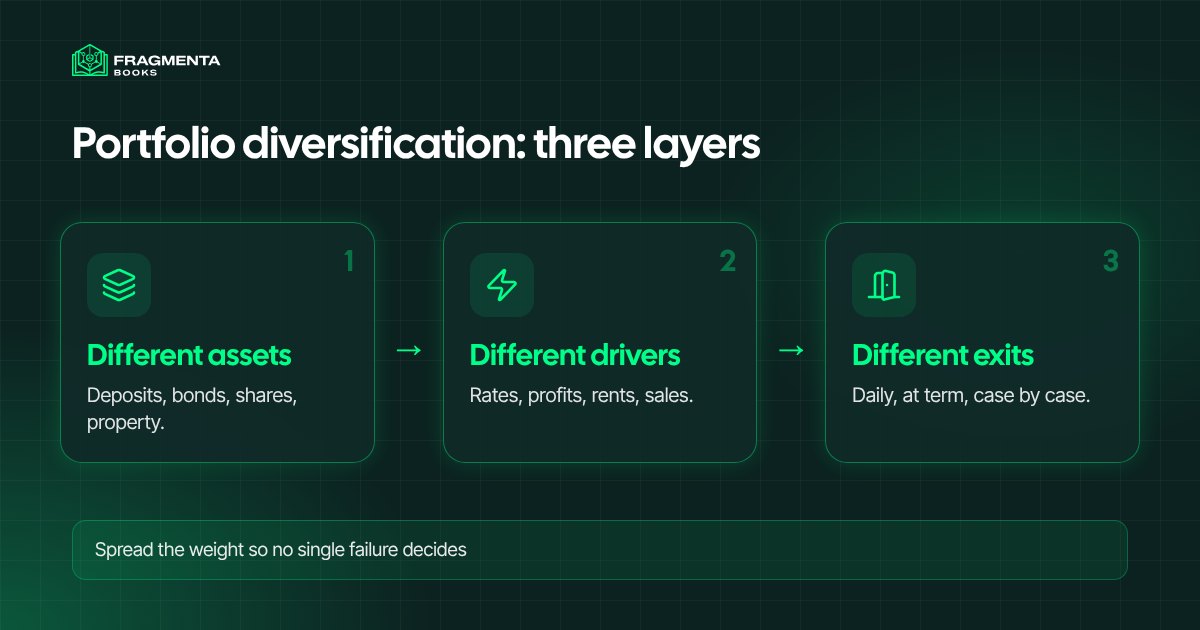
Three layers help to check yourself:
- Different assets. Deposits, bonds, shares, property and royalties are different kinds of right.
- Different drivers. Ask what moves each one: central bank rates, company profits, rents, or the sales of a book.
- Different exits. Some assets can be sold in a day, others only at the end of a term or when someone else wants them. Keep part of your money where you can reach it.
What happened in 2022: the classic mix disappointed
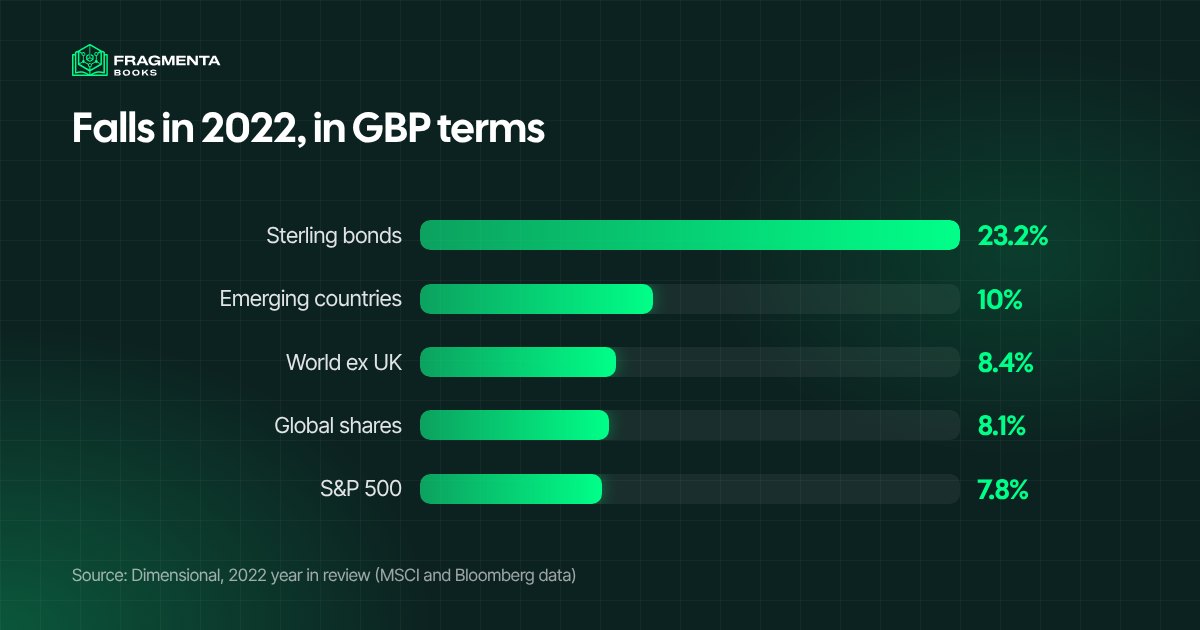
Many people hold shares and bonds on the idea that bonds tend to rise when shares fall. In 2022 that failed. According to Dimensional's review of the year, in pound terms global shares (MSCI All Country World) fell 8.1% and the S&P 500 fell 7.8%, while sterling-denominated bonds lost 23.2%, their worst return in decades (Dimensional). A traditional portfolio of 60% US shares and 40% US government bonds still ended that year down 11% in dollars.
The same review also shows why spreading is still useful: UK shares gained 7.1% in 2022 in pound terms, and value shares gained 4.1% while growth shares fell 19.6%. In one year, different parts of the same portfolio moved in different directions. Nobody can know in advance which part will do well, which is exactly the reason to hold more than one.
Where alternative assets fit
Alternative assets are what sits outside the classic mix of cash, bonds and listed shares: property and property crowdfunding, loans, royalties, art, collectibles, commodities. We look at the main ones in our guides on real estate crowdfunding, fractional art and music royalties. The reason people look at them is the driver: the rent of a flat, the interest of a borrower or the sales of a song do not depend on the same events as a bond price.
The limits are just as real. The FCA warns that high-risk investments can lose all the money put in and that many are not covered by the Financial Services Compensation Scheme (FCA). Alternative assets are usually harder to value, can be slow to sell and may charge higher fees. For this reason many people give them a small part of a portfolio, not the core.
Options compared
| Main driver | Who does the work | How you leave | Main risk | |
|---|---|---|---|---|
| Savings and deposits | Central bank rates | Almost nobody | Withdraw or wait for the term | Rates fall, inflation |
| Bonds | Rates and the issuer's ability to pay | You, to choose and monitor | Sell, or wait for the end | Issuer fails, price falls |
| Listed shares and funds | Company profits | You, or a fund manager | Usually quick sale | Prices swing, dividends are cut |
| Property and crowdfunding | Rents and project results | The platform or the owner | Often at term | Project fails, hard to sell |
| Royalties | Sales of the work | The owner of the work | Keep or sell the rights | Sales fall |
Advantages and limits
Advantages
- Less dependence on one outcome. A weak year for one asset weighs less on the total.
- A different driver. Assets tied to rents or sales do not follow interest rates in the same way.
- A clearer picture. Asking what pays and what can stop it forces you to understand every piece.
Limits
- No protection from every fall. In a broad crisis many assets fall together, as 2022 showed.
- Complexity and cost. More pieces mean more fees, more paperwork and more to monitor.
- Slow exits. Alternative assets can be difficult to turn back into cash.
- Over-diversifying. Owning too many small positions makes it hard to follow any of them.
In our experience of publishing books on Amazon, the lesson is the same at a small scale: royalties that look steady over a year are the sum of many uneven months and many different titles, and rarely the work of one bestseller.
How a book royalty participation fits
Fragmenta Books groups books published on Amazon KDP into collections and opens up to 49% of their net royalties to participants. The founder keeps at least 51% and goes on managing the books. Each participation is divided into units recorded as tokens on the Base blockchain, and royalty distributions arrive every three months in USDC, straight to the participant's wallet. A participation includes the digital copies of the books in the collection.
For someone looking at diversification, the relevant point is the driver: what a collection pays depends on how the books sell on Amazon, not on interest rates or company profits. Amazon KDP lets authors choose between a 35% and a 70% royalty option on eBooks (Amazon KDP Help), and the amounts vary month to month. Each collection page publishes the monthly royalty records and the original KDP reports, so you can read the past before deciding. The past does not say what future royalties will be, and nothing is guaranteed. Someone who wants to leave can offer their units to other verified members through secondary transfers, which depend on other members wanting them. To see how collections are chosen, read the evaluation process, and for current offers see the open book collections.
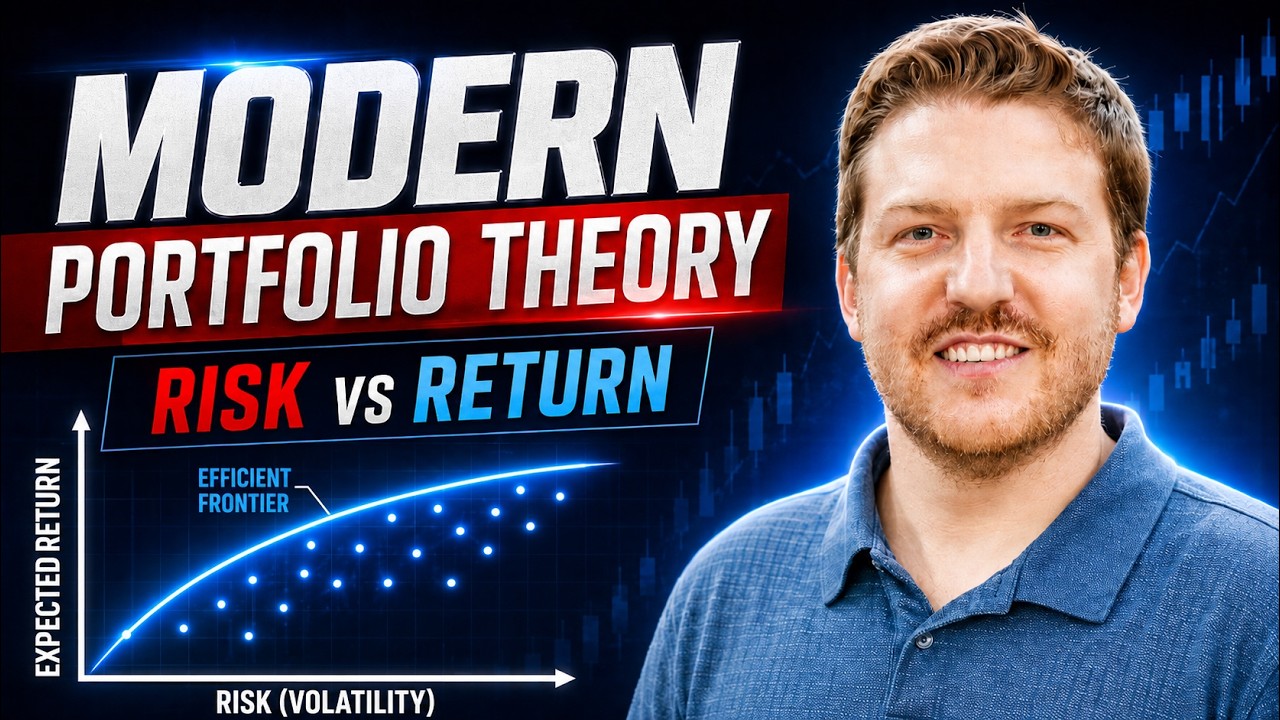
This video from a CFA charterholder explains how correlation makes diversification work and where the theory reaches its limits.
How to take part in a book collection, step by step
- Choose a collection among the open book collections and the number of units.
- Create your account and add your residence details.
- Verify your identity (KYC) with a document and a selfie, directly on the site.
- Connect a wallet, or create one in a few clicks.
- Sign the Licensing Participation Agreement online.
- Pay by card or bank transfer. Once the payment is confirmed, the tokens are sent to your wallet.
Checklist: what to check before adding an asset
- What does it depend on? If it depends on the same thing as your other holdings, it adds little.
- What can stop the payments, and have you read the weak periods?
- How do I leave, how long does it take, and at what cost?
- What are the fees and the tax on what I receive?
- How big a part of my money is it? A new, harder-to-sell asset is easier to live with as a small part.
- Do I understand it well enough to explain it to someone else?
- Is the promise too good to be true? A high, steady payment with no risk does not exist.
- Do I keep money within reach for what I may need in the next months?
Who it is for
Spreading money across different kinds of assets suits anyone with savings who wants no single outcome to decide the whole result, provided each piece fits their time and patience.
- A saver with money only in deposits: adds a bond fund or a broad share fund to get a second driver, and keeps an emergency amount in cash.
- An employee building a pension on top of the state one: spreads over shares, bonds and a little property, reviewing once a year.
- A reader curious about real assets: gives a small part to property crowdfunding or royalties, as long as they can leave that money untouched for some years.
- An owner of a small business or website: holds a portfolio away from their own work, so a bad year in the business is not also a bad year for their savings.
Key terms
- Correlation: a measure of how closely two assets move together; the lower it is, the more one helps the other.
- Asset class: a family of assets that behave in a similar way, such as cash, bonds, shares or property.
- Rebalancing: bringing a portfolio back to its intended weights after some assets have grown more than others.
- Liquidity: how quickly, and at what cost, an asset can be turned back into cash.
- Alternative assets: assets outside the classic mix of cash, bonds and listed shares, such as property, loans, royalties or art.
- Drawdown: the fall of a portfolio from its highest value to its lowest point before it recovers.
Frequently asked questions
What is portfolio diversification?
It is spreading money across assets that do not depend on the same events, so that a poor result in one does not decide the whole outcome. The key is that the assets behave differently, not that there are many of them.
How do you diversify a portfolio?
Start with the classic asset classes such as cash, bonds and broad share funds, then ask what moves each one. Add other kinds of asset only if you understand what drives them, how to leave and what they cost.
Are alternative assets good for diversification?
They can be, because their drivers differ from bonds and shares, but they are often harder to value and sell. Many people keep them as a smaller part of a portfolio.
Does diversification protect against losses?
Not completely. It lowers the weight of any single failure, but in a broad crisis many assets fall together, as shares and bonds did in 2022.
How many assets do I need?
There is no magic number. What matters is that the pieces have different drivers and that you can follow them. Too many small positions can be as hard to manage as too few.
Where does a book royalty participation fit in diversification?
It is a contractual participation in the net royalties of books, managed by the founder, whose payments depend on book sales rather than on interest rates. Distributions every three months depend on how the books actually sell, and nothing is guaranteed.
Sources
- Wikipedia, Diversification (finance)): the concept in brief.
- Wikipedia, Modern portfolio theory: Markowitz and the role of correlation.
- FCA, Diversification: the regulator's plain explanation, with a worked example.
- FCA, Understanding high-risk investments: the possible loss of all the money put in.
- Dimensional, 2022 year in review: returns of shares and bonds in 2022, in pound terms.
- Verbraucherzentrale, Das kleine Einmaleins der Geldanlage: why several products are not yet diversification (in German).
- AMF, Bien diversifier son épargne: combining investments that behave differently (in French).
- Amazon KDP Help, eBook royalties.
- Fragmenta Books, open book collections: the monthly royalty records and original KDP reports of each collection.
About Fragmenta Books
Fragmenta Books is a platform operated by Tech Go Ltd, a company registered in England and Wales (company number 14776862), founded in 2023 and based in Brentford, United Kingdom. It lets people participate in the net royalties of book collections published on Amazon KDP and Audible: each participation right is created by a legal agreement and recorded as a token on the Base blockchain; the part of the royalties that belongs to each participant is paid every quarter in USDC.
Fragmenta Books was created by three teams that joined forces: publishing entrepreneurs with more than 10 years of experience on Amazon and Audible, a team of blockchain developers with 6 years of experience in real-world asset (RWA) tokenization, and a legal team specialised in RWA tokenization worldwide.
Contact Us
- Email: info@fragmentabooks.com
- Platform: Fragmenta Books
- Company: Tech Go Ltd — company number 14776862
- Address: 24 Tax Suite 137b Westlink House, 981 Great West Road, Brentford, TW8 9DN, United Kingdom